The relationship between minors and the mass media is a broad topic and it would take a specific panel discussion to address it properly. Right now, we will just take a look at some of the risk factors that concern the exposure of underage people in the newspapers, focusing on the use of it in the information, which covers however a big part of this topic. In particular we will see both the legal and deontological point of view regarding the examination of certain issues by the journalists and some practical examples taken from the journalistic accounts of male violence on underage girls.
Several years ago, I was part of the “Commission for the protection of minors in the world of communication”, established by the guarantor Authority for childhood and adolescence chaired by the Prosecutor of the Republic Maria Monteleone, meeting attended by the Journalists’ Association, the Guarantor of Privacy, Agcom, Rai, the Postal Police and associations that deal with the subject. The result was an accurate work, entitled “The protection of minors in the world of communication” upon which I draw your attention for more details. With regard to the protection of minors there are different levels of it and in addition to art. 31 of our Constitution that protects minors (the Italian Republic “shall protect childhood and youth by promoting the necessary institutions to pursue the objective”) and the International Convention on the rights of children and adolescents of the United Nations ratified by Italy, we have a Privacy Code (D. L.vo. n.196/2003) according to which, referring to the decree of the President of the Republic n. 448/88, it expressly states
“The prohibition of publication and dissemination by any means of news and images that allow the identification of a minor”
As far as our code of ethics is concerned, the same institutive law of the Order of Journalists (L. n. 69/63) in art.2 states that “the publication and disclosure, by any means, of news or images that allow the identification of the minor involved in a proceeding is forbidden”, except in the hypothesis that he/she is in the phase of a public hearing. Rules that have become an integral part of our code of ethics thanks to the Charter of Treviso according to which, as a general rule, the journalist can deal with cases of minors but must not reveal his or her identity: he/she is authorized to write or broadcast the news but without exposing the minor. The Treviso Charter dates back to 1990, drafted by the National Press Federation, the Order of Journalists and Telefono Azzurro. It regulates the relationship between the freedom of information and the protection of minors, avoiding a possible second victimization of the minor involved in the facts. In this way, the account doesn’t harm neither the right to inform nor the minors involved in it.
This form of binding self-regulation that was expanded with the advent of the web, through the Vademecum 95 and the updating of the 2006 Charter
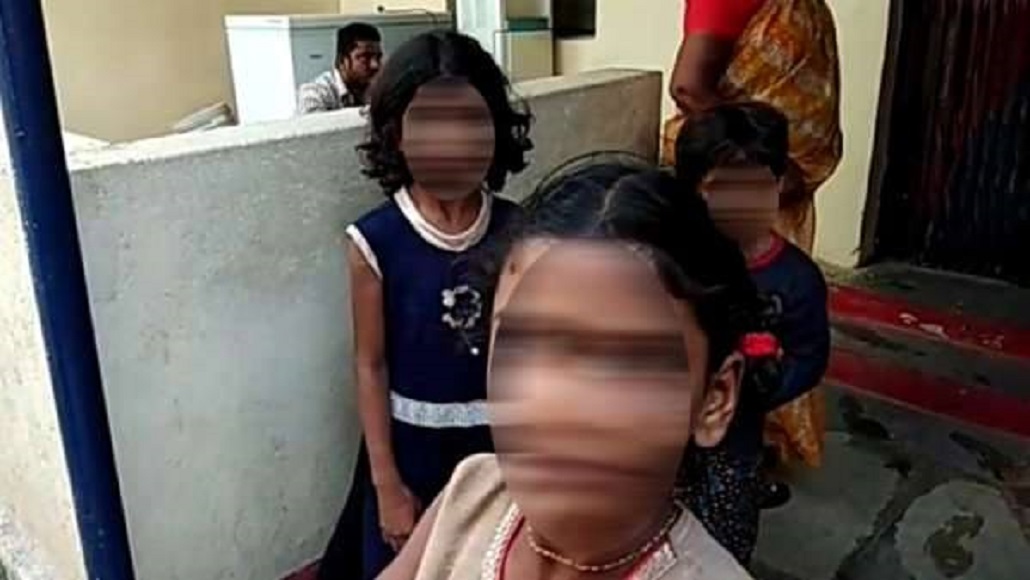 The objective is to protect the development of the personality and its psycho-physical balance ensuring the confidentiality and circulation of news respecting the protection of their personal data according to which the minor must not be identifiable, not even through indirect elements such as the personal details of the parents, the house or school address. These rules subject to exceptions only when the matter is really in the interest of the minor (e.g. kidnapping, disappearance or other), in cases where there is clear prior consent of the parents, of the competent judge or of whoever legitimately has the minor’s guardianship. But let’s see what happens in the newspapers and specifically when it comes to underage girls. A separate chapter should concern those who are still called by many newspapers as cases of “call baby”: a title that represents a contradiction, it approaches prostitution as if the girls were consensual and not as a form of violence or coercion. A serious concept that is disclosed as normal and acceptable, which falls within what we will call from now on as “the soft-porn narrative of violence”. A label that is nowadays abused and inevitably recalls a pedophile imaginary.
 In this regard, we recall the case of two minors involved in a prostitution ring in Rome some time ago, which led to the position taken by the National Order of Journalists that issued an invitation to the directors of the newspapers to interrupt what has been defined as “mediatic voyeurism”: a modus operandi not meant to inform but only to stir the pot of a perverted male sexual imaginary, in a competition to provide the most disgusting detail by publishing text messages and elements that led to the identification of the girls. A soft-porn narrative that includes also the account of sexual violence made in many newspapers where underage girls are involved: young girls who are questioned and told as untrustworthy that first go along with it and then regret it and report it, girls who often turn out being victims of the pack.
Minors that survived the violence are exposed without any real protection and regardless of the age
with the risk of being recognized through indirect elements: media exposure that prevents the minor not only from recovering the trauma but also precludes the possibility of a normal life and development. A re-victimization that occurs when the information, in describing the fact, follows stereotypes and gender prejudices already used against women, all women, without taking into account that we are talking about underage people that will inevitably not only go through a second suffering, a second damage, but the perspective of having a normal life will be compromised too.
 The stereotype that is traced makes the girl appear responsible for what she has suffered justifying the offender that was provoked by a skirt that was too short, by the beauty of the girl, by the fact that it was her that provoked them, and that gave confidence to the boys, therefore they were justified. Rapes that are mitigated in the stories as if they were less serious crimes, because related to the still existing cultural fact that a sexual assault cannot be proved, and that a pretty girl has to expect a rape in her life, beyond the fact that she is little, grown up, minor or an adult, only because if she is a female, and among other things also young and good-looking, she becomes a “sexual prey”. Girls who suffer a rape, and that too often are not believed, are painted in an ambiguous way: their profiles support the dangerous transformation of the girls from being the injured party into becoming the defendant.

An important case was the one of Montalto di Castro, where a girl of 15 years old was raped by a gang. Not only part of the citizens and the mayor took the defense of the rapists, but also the newspapers insisted a lot and for several months on a story often ambiguous and murky. The girl was exposed in a crucial and damaging way, through the spreading of elements of recognizability and causing her a second damage in her growth depriving her of an adequate development, as then happened. An excessive media coverage that supports and broadens the re-victimization, causing a second suffering to the person and which, in the case of minors, can be devastating since it can compromise the development.
A soft-porn narrative that lingers on elements related to a perverse male imaginary that does not consider the age but rather speculates on this factor

and that can be consumed even when the underage girl is dead, as in the case of Desirèe Mariottini, the 16 years old girl raped and killed in San Lorenzo in Rome. Desirèe in the newspapers has been portrayed as a poor little girl drugged and with a tormented soul, a lost, damaged girl who would have in any way ended badly, and who prostituted herself to get a dose. As in many other cases the minor was exposed through the publication of photos that clearly picture her in shorts and captivating poses: pictures taken from her personal profile on Facebook without the consent of her parents and fed to the public, not because these images added anything relevant to the story but just because in this soft-porn narration, the women involved, minors as well, are represented as provoking and being the cause of their own damage.
A prejudice hard to erase both from the mind of the writer and the reader is the misconception that there are good women and bad women without considering the age: this is nothing but a fallacious cultural construct given that women and girls of all ages are raped and killed, beyond what they wear, what they look like and how they behave, precisely because it is not about the sex but the act of oppression and violence itself.
 The “Libero” Italian newspaper wrote about Desirée: “The student of Cisterna was just a girl, she actually lived as a restless and fragile woman, drowning her problems in psychotropic drugs and bad company. Nothing to do with the light-heartedness of a young woman of her age. Those investigating have the suspicion she has prostituted herself in order to get a dose”. “Ticino Online” has published an unreadable article entitled “the ordeal of a wh**e”: without considering the proved fact that Desirée didn’t have any sexual relation before the rape, no newspaper has rectified or even apologized to the victim’s family.
These articles besides having damaged the memory of a raped and killed underage girl, have caused serious pain to the family
Yet the statistics tell us that, not only about 7 million women in Italy are victims of violence, but also that according to Terre des Hommes, in the last 10 years sexual and child abuses increased by 43%, with more than 15 minors per day who suffer violence, the 84% of whom are girls with an increase of 18% in one year. This violence is mostly caused not by foreigners (15.1% of the perpetrators of violence against women), but by white Italian men who have intimate relationships with the victim and who act within their familiar environment, stories we wouldn’t know about unless they are told in a murky and prurient way by some local newspapers.
_____________________________________
Inquiry presented at the roundtable “One child, many trials” at the headquarters of the Forensic Congressional Body organised by the National Union of juvenile chambers in Rome.